
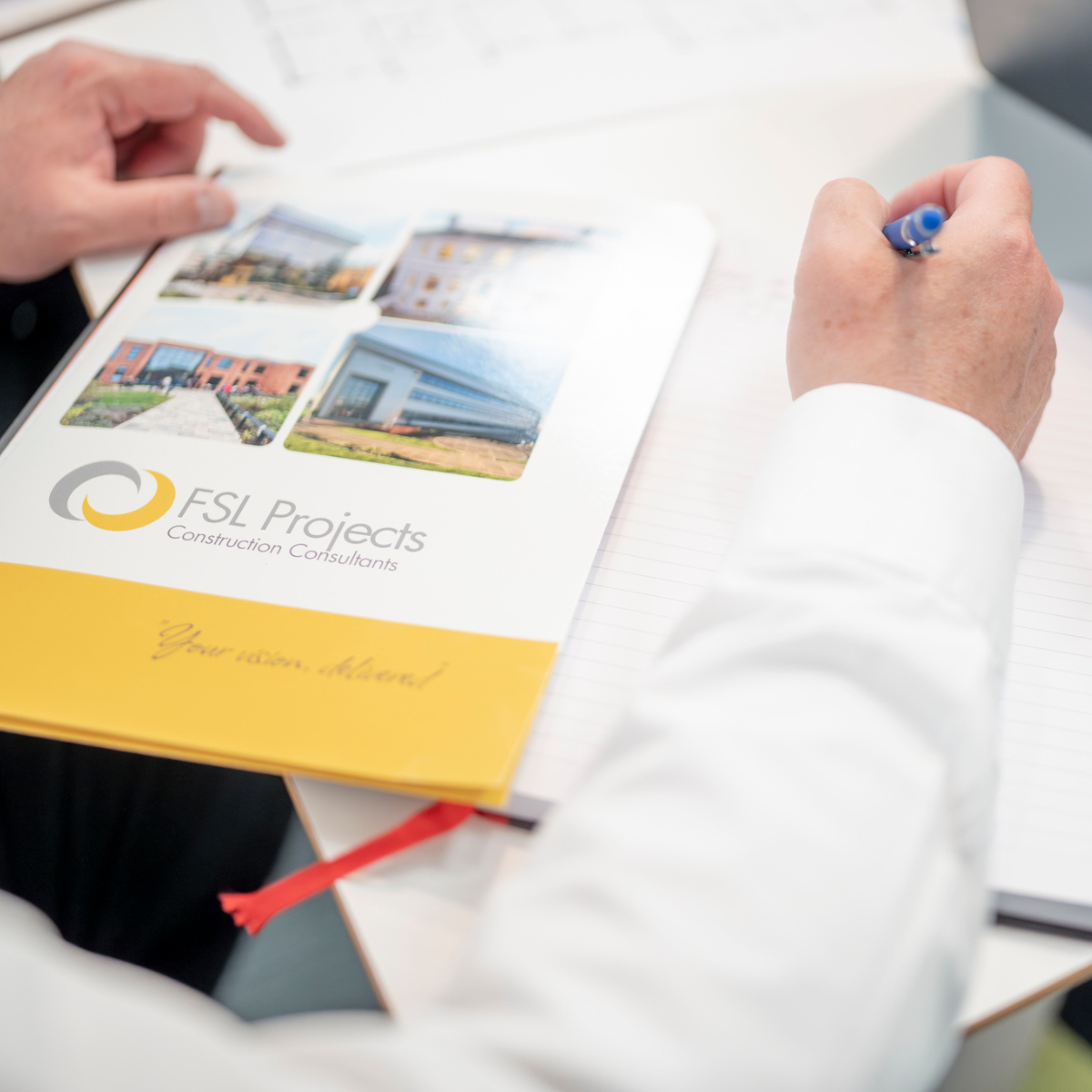
A practical guide for UK clients – from the FSL Projects team
Entering into a construction project – whether a home extension, commercial fit-out, or full new build – is an exciting milestone. However, before any work begins, the most important tool at your disposal is not a hammer or a hard hat. It is your contract.
A well-drafted construction contract protects your budget, programme, and legal position. A poorly drafted one can expose you to delays, unexpected costs, and disputes that consume time and money. Before signing on the dotted line, every UK client should understand the key elements that safeguard their project
1. Scope of Works
A clear and comprehensive scope of works is fundamental. It should set out precisely what the contractor is responsible for delivering, including:
- Detailed descriptions of the works
- Drawings, plans, and specifications
- Materials and standards (including brands where relevant)
- Explicit exclusions
Vague descriptions such as “kitchen refurbishment” or “loft conversion” leave too much room for interpretation and are a common source of dispute. Detail reduces risk.
2. Price Structure and Payment Terms
UK construction contracts typically adopt one of three pricing models:
- Fixed price – predictable, but variations are charged separately
- Cost plus – flexible, but requires transparency and trust
- Measured works – based on agreed rates and quantities
Your contract should clearly state:
- When payments are due
- What triggers each payment (e.g., milestones, valuations)
- Whether VAT is included
- How variations will be priced
Large deposits should be avoided. For most domestic projects, a modest upfront payment (5–10%) is reasonable, with subsequent payments linked to progress.
3. Programme and Completion Dates
The contract should include:
- A realistic commencement date
- A target completion date
- Provisions for dealing with delays
- Whether liquidated damages apply
Delays are common in construction, but the contract must define how they are assessed and managed.
4. Variations and Change Control
Changes are inevitable, but unmanaged changes are costly. The contract should outline:
- How variations must be instructed (preferably in writing)
- How they will be costed
- Whether they impact the programme
Verbal agreements are risky. If it is not documented, it does not exist.
5. Insurance and Warranties
Before work begins, ensure the contractor holds:
- Public liability insurance
- Employer’s liability insurance
- Contractors’ all-risk insurance
For residential projects, consider:
- A structural warranty (e.g., 10-year new-build warranty)
- Manufacturer warranties for key components
Request copies of certificates — reputable contractors expect this.
6. Quality Standards and Defects
Your contract should define:
- The expected standard of workmanship
- How defects will be identified
- The length of the defect’s liability period
- The process for rectifying defects
A typical defects period ranges from 6 to 12 months after completion.
7. Dispute Resolution
A robust contract anticipates how disagreements will be resolved. Look for clauses covering:
- Negotiation and mediation
- Adjudication (widely used under UK construction law)
- Arbitration or litigation
Adjudication is often the quickest and most cost-effective route for resolving construction disputes in the UK.
8. Termination Rights
Both parties should have clearly defined rights to terminate the contract. Check for:
- Valid grounds for termination
- Required notice periods
- Payment obligations upon termination
These provisions protect you if the contractor abandons the project or if you need to remove them for non-performance.
9. Compliance with UK Standards
The contract should reference compliance with:
- Building Regulations
- Planning permissions
- CDM Regulations (health and safety)
- Relevant British Standards
If using a standard form contract (e.g., JCT or NEC), ensure it is appropriate for the scale and complexity of your project.
Final Thoughts
A construction contract is not merely administrative paperwork – it is the legal and commercial foundation of your project. Taking the time to understand it now can prevent stress, cost overruns, and disputes later.
Engaging a Chartered Quantity Surveyor provides invaluable protection. They understand the formalities of construction contracts, manage risk, and ensure you are legally and financially safeguarded throughout the project.
A strong contract- builds strong projects.
Need help reviewing a contract or appointing the right team?
At FSL Projects, we provide expert contract advice, quantity surveying and project management services across the UK. Get in touch with our team for a no-obligation conversation.
📩 [email protected] | 📞 0330 043 9007 | 🌐 www.fslprojects.co.uk
Regulated by RICS
© FSL Projects Ltd. This article is for guidance purposes only and does not constitute legal advice.